
UK Horse Racing Place Betting: Strategic Each-Way Market Analytics
 Available in US
The two-part British wager, its place terms, and the markets that price it — written for readers who want the mechanics, not the marketing.
Start Reading
UK Horse Racing Each-Way Map: Quick Pricing and Place Terms
- UK place terms collapse to one table: under five runners, win only; five to seven, two places at 1/4; eight-plus non-handicaps and eight-to-eleven handicaps, three places at 1/5; twelve-to-fifteen handicaps, three places at 1/4; sixteen-plus handicaps, four places at 1/4.
- British 2025 averages are 8.90 runners on the Flat and 7.84 over Jumps, with 26% of races in the worst place-market band — real edge lives in twelve-plus runner handicaps, not the median race.
- Extra-places promotions are the single consistent +EV mechanism in the public each-way market; one extra paid place on a 20-runner race expands the place net by roughly 25%.
- Fixed-odds, Tote pool and Betfair Exchange are three different products on the same race; overround, takeout and commission are not the same thing.
Why UK place betting deserves an editorial guide
The first each-way bet I ever lost on a technicality came down to one runner being declared a non-runner forty minutes before the off. The field dropped from eight to seven and my "three places at one-fifth the odds" quietly became "two places at one-quarter the odds." My horse finished third. On the racecard I'd printed that morning, I was a winner. On the bet itself, I was nothing. Seven years of writing about UK each-way markets later, I can tell you this kind of small-print whiplash is not a bug. It is the actual texture of place betting in this country, and almost no general guide ever bothers to explain it properly.
That gap is what this article exists to close. Each-way is the single most British way to bet on horses — a two-part wager splitting your stake between a horse winning and a horse "finishing in the frame" — and yet most readers arrive at the topic via a sportsbook landing page written to sell, not to teach. Online betting on horse racing in Great Britain generated £766.7 million in gross gambling yield in the financial year to March 2025, second only to football among remote betting verticals. The statutory Horserace Betting Levy hit £108.9 million in the same window, the highest yield since the 2017 reforms. A lot of that money is each-way money.
My goal here is to write the editorial version. The one that tells you what an each-way bet actually is, where place terms come from, why the field size on a Wednesday at Wolverhampton matters more than the brand on a betting slip, and how the Tote, the fixed-odds book and the Betfair Exchange each build a different place market out of the same race. I won't tell you which firm to bet with. I will tell you what to look at on the racecard before you click anything. The place-term language throughout — handicap, non-handicap, 1/4 and 1/5 the odds — is the British industry standard, codified in the rulebooks of every UKGC-licensed firm.
The UK each-way market in numbers
Ask the punter next to you at any UK racecourse bar how big the each-way market is and the estimate will almost always be wrong in the same direction — too small. British place betting is loud at Aintree and quiet the other fifty Saturdays of the year, so the long tail of turnover gets badly underrated.
£766.7m
online horse racing GGY, UK, year to March 2025
£108.9m
statutory Horserace Betting Levy, year to March 2025
65.6%
share of UK horse race betting turnover that is online
£2.6bn
total remote betting GGY in Great Britain, same window
Start with the headline. Online betting on horse racing produced £766.7 million in gross gambling yield in the financial year April 2024 to March 2025, against a total remote betting GGY in Great Britain of £2.6 billion. Football was bigger at £1.3 billion; nothing else came close. The year before, online horse racing GGY sat at £771.1 million. The shape of the comparison matters — racing's share is not collapsing, but it is no longer the growth engine of the British sportsbook. Around two-thirds of all UK horse race betting turnover now happens online.
Sitting on top of those gross numbers is the levy. The Horserace Betting Levy hit £108.9 million in the year to 31 March 2025, the highest yield since the 2017 reforms, up from £105.3 million the year before. The Levy Board has nonetheless budgeted only £103 million for 2025 to 2026, implying a planned operating deficit. The reason is turnover. UK horse racing betting turnover through Q3 2025 was down 4.2% year-on-year and 12.8% below the same nine-month window in 2023. The pool of money is still huge. It is also getting smaller.
"Total turnover up to the end of Q3 in 2025 is 4.2% below the same nine months in 2024 and 12.8% below 2023."
Richard Wayman, Director of Racing, British Horseracing Authority
What is happening underneath that aggregate is more interesting than the aggregate. The BHA's quarterly reports describe a two-speed market. Premier Fixture turnover per race rose 2.7% in 2025 versus 2024. Core Fixture turnover per race fell 8.6% in the same window. The marquee meetings at Cheltenham, Aintree, York and Ascot are holding up; the Tuesday-night cards from second-tier all-weather courses are bleeding. That is a place-market story, because Premier and Core differ sharply on field size — and field size is what dictates how many places each-way pays. The European Commission, clearing the 2017 levy reforms, described UK racing and betting as having "a unique interdependency that goes back over 200 years." Treat the market as the institution it is and the rest of the guide makes more sense.
The anatomy of an each-way bet
Here is a question I ask new readers and watch them get wrong nine times out of ten. You put a £5 each-way bet on a horse at 10/1. The horse wins. What do you get back? Most people answer £55 or £60. The correct answer, in standard UK terms for a non-handicap of 8+ runners paying one-fifth, is £70.
An each-way bet is two bets stitched together on the same slip, with the same stake going to each half. When you write "£5 each-way," you are staking £10 — £5 win, £5 place. The two halves settle independently. If the horse wins, both pay out. If it finishes in the paid places but does not win, only the place half pays. Outside the paid places, both halves are lost.
The £5 each-way example, walked through
Stake: £5 win + £5 place = £10 total outlay. Odds: 10/1. Place terms: 1/5 the odds for non-handicap 8+ runners. If the horse wins, the win half returns £5 stake plus £50 profit = £55. The place half settles at 1/5 of 10/1, which is 2/1, returning £5 stake plus £10 profit = £15. Total return: £70. Net profit on £10 staked: £60.
That walk-through is the entire mechanical engine of UK each-way. Two parts split your money, the place half pays at a fraction of the win odds, and the fraction depends on the race. Everything complicated on a betting slip — paid 3 at 1/5, paid 4 at 1/4, paid 7 at 1/5 with extra places, dead-heat reductions, Rule 4 deductions — is variation on the same two halves.
A horse "in the frame" has finished in the paid places. A "place-only" bet is a single-leg bet on a horse to finish in the paid places — available at most fixed-odds books and on the exchanges but not the same product as the place half of an each-way bet, which is why you cannot price it by simply taking a fifth of the win odds. The starting price (SP) is the price returned by the on-course market at the off, and it matters for each-way because some firms apply Best Odds Guaranteed only to the win part, not the place part.
In the frame — a UK racing phrase for finishing within the paid places, whether the race pays two, three, four or more positions. The "frame" comes from old printed racecards, where placed horses were listed inside a literal box at the top of the page.
The place fraction is not a discount. It is a price. When a bookmaker quotes 1/5 the odds on a 16/1 shot, they are offering a place price of 16/5, around 3.2/1 in decimals. A horse with a real chance of placing 1-in-3 of the time at that price is almost exactly fair value. A horse at 1-in-5 is bad value. The whole craft of each-way is recognising which is which.
Place terms: the industry rulebook
For something so central to British betting, the place terms rulebook is remarkably unwritten in the consumer-facing world. There is no statute setting it out. The UKGC does not publish it. What exists is a strong, near-universal industry standard, lifted into the terms of every UKGC-licensed bookmaker. Strip the marketing away and it collapses to a single table, determined by whether the race is a handicap and how many runners come under starters orders.
| Race type | Number of runners | Places paid | Place fraction |
|---|---|---|---|
| Any | Fewer than 5 | Win only | — |
| Any | 5 to 7 | 2 | 1/4 the odds |
| Non-handicap | 8 or more | 3 | 1/5 the odds |
| Handicap | 8 to 11 | 3 | 1/5 the odds |
| Handicap | 12 to 15 | 3 | 1/4 the odds |
| Handicap | 16 or more | 4 | 1/4 the odds |
That is the bet365 schedule. It is also the Sky Bet, William Hill, Paddy Power and Betfred schedule — functionally identical across every major UK fixed-odds operator. Where they differ, they differ visibly, usually under an extra-places promotion on a single named race.
Three things about the table trip people up. First, the handicap-versus-non-handicap distinction kicks in at 8 runners and disappears at 16. A 16-runner handicap and a 16-runner Group 1 sprint pay completely different place terms: four at 1/4 in the handicap, three at 1/5 in the non-handicap. Second, the "fewer than 5" rule is absolute — it means fewer than five runners under starters orders, after withdrawals. If a non-runner pulls the field from 5 to 4, your each-way becomes win-only and the place stake is refunded. Third, the 5-to-7 band exists in all race types — there is no separate handicap row for it.
What changes when a non-runner is declared
If a withdrawn horse drops the field from 16 to 15 in a handicap, place terms shift from four places at 1/4 to three at 1/4. If the drop takes the field from 8 to 7 in a non-handicap, terms shift from three at 1/5 to two at 1/4. The bet is settled at whatever the terms are at the off, not when the bet was placed. This is the source of more arguments at the settlement window than any other single rule.
For the deep mechanics of how every tier behaves under stress and how the bands interact with the 26% of British races that fall in the worst place-market band, the cluster guide on UK each-way place terms by field size walks the full rulebook tier by tier. The bookmakers do not extend the table above 16 because the British programme produces almost no non-handicaps above 20 runners. The Grand National, the Cesarewitch and a handful of historic monsters are the exceptions, and they sit on top of the standard rulebook with their own promotional architecture.
Worked each-way calculations
Each-way calculations look simple until you try one on the back of a betting slip while a 16-runner handicap is being weighed in. Three at the pace you'd need at the rails.
Worked example one: the textbook each-way
Bet: £10 each-way at 20/1 in a 14-runner handicap. Place terms: 3 places at 1/4 the odds.
Total outlay: £10 win + £10 place = £20.
If the horse wins: win half returns £10 + (20 × £10) = £210. Place half settles at 1/4 of 20/1 = 5/1, returning £10 + (5 × £10) = £60. Total return: £270. Profit on £20 staked: £250.
If 2nd or 3rd: win half loses. Place half returns £60. Net result on £20 staked: profit of £40.
If 4th or worse: total loss of £20.
Notice the asymmetry. The same £10 each-way bet is worth £250 profit on a win and £40 profit on a place. A horse that places one in four times at 20/1, never winning, is a losing bet. A horse that wins one in twenty-five and places a further five in twenty-five is comfortably profitable. The each-way punter is paid for the win; the place leg is insurance and consolation.
Worked example two: the band-shift trap
Bet: £5 each-way at 14/1 in an 8-runner non-handicap. Place terms at time of bet: 3 places at 1/5. Two non-runners declared on the morning; field drops to 6.
New place terms: 2 places at 1/4 the odds.
If the horse finishes 3rd: under the original 3-place terms it would have paid. Under the new 2-place terms, 3rd is outside the paid places. Place half loses. Total loss £10. The rule that place terms are fixed at the off, not at the time of bet, is universal among UK firms.
The fraction effect in pure numbers
Same horse, same race, same 2nd-place finish. £10 place stake at 20/1.
At 1/4 the odds: place price 5/1, return £60.
At 1/5 the odds: place price 4/1, return £50.
The gap between 1/4 and 1/5 on a 20/1 shot is £10 per £10 placed. Over a season, that gap is the difference between a profitable strategy and one that breaks even.
The third calculation nobody runs in their head decides whether a strategy is sound. Take the place leg only. Treat it as a standalone bet. Ask whether the price is better or worse than the horse's actual chance of placing. If 1/5 of 16/1 gives you 16/5 — call it 3.2/1 — your place bet is good if the horse places more than once in 4.2 starts, bad if less. The whole edge of competent each-way lives inside the place leg.
What real UK field sizes mean for each-way bettors
I open the morning racecard most days, and the first column my eye goes to is the runner count. Not the odds, not the going report, not the trainer. Runners. Field size is the single fact that decides whether the place market for that race is generous, mean, or barely worth a flutter.
8.90
average Flat field size, Britain, 2025
7.84
average Jumps field size, Britain, 2025
26%
of British races in 2025 had 5 to 7 runners
11.02
average Premier Flat field size, 2025
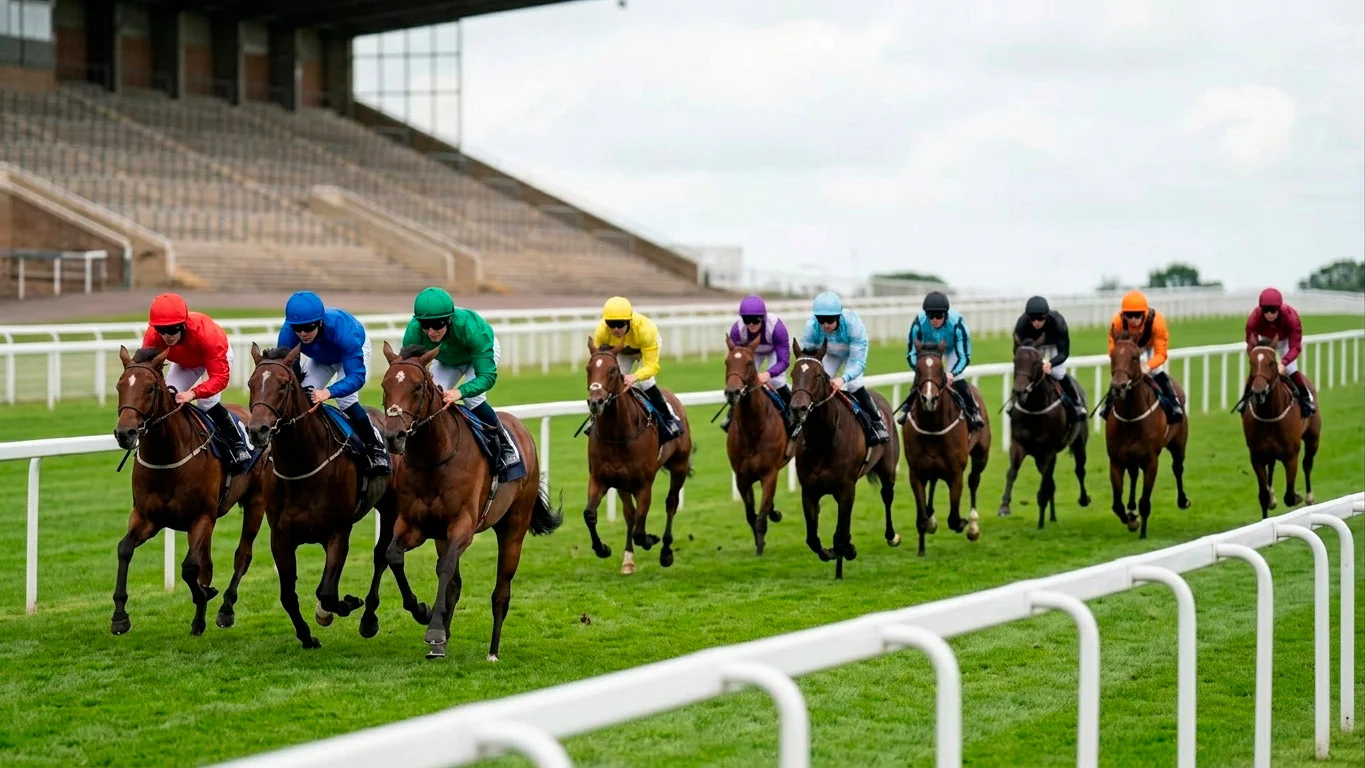
The British Flat programme in 2025 averaged 8.90 runners per race. National Hunt averaged 7.84. Those are slightly more than the threshold for three places in a non-handicap and well below the 12-runner mark where handicap fractions improve to 1/4. The headline hides a harsher distribution. At Core Fixtures the 2025 average Flat field fell to 8.54 from 8.78, and Jumps fell to 7.63 from 8.52. The Premier numbers held the Flat average at 11.02 and Jumps at 9.41. Same calendar, two different sports underneath.
That distribution matters because of one number. A granular analysis of the 2010-to-2025 dataset shows 26% of all British races in 2025 fell into the 5-to-7 runners band on the handicap side, or the 6-to-7 band on the non-handicap side. Around a quarter of the British racing calendar is a thin place market by the time you reach the rails. The belief that each-way is "always available" on UK racing is technically true and practically misleading.
"We wanted to make our best racing better and use that as our tool to grow interest in the sport. Part of that was making the racing as good as we could, so we invested in the racing and we have seen a real upside on that."
Richard Wayman, Director of Racing, British Horseracing Authority
The Premier-Core split was an attempt to concentrate racing quality into a smaller number of fixtures, and the field-size data shows it working at the top and failing at the bottom. The number of horses in training in Britain fell to 21,728 in 2025, a 2.3% year-on-year decline. Fewer horses, the same fixture list, and the maths takes care of itself. What do you do with that fact? You filter. The cluster article on each-way strategy across field size, odds and race type works through the three-filter framework in detail. The short version: most of the each-way value in British racing lives in fields of 12 or more in handicaps, and in the marquee non-handicaps where extra-places promotions stretch the paid frame. Below 12 runners in handicaps, below 8 in non-handicaps, the maths is fighting you. The median UK race in 2025 had closer to 7 runners than to 9 — outliers like the Grand National's 40 drag the average up. Treat marquee fields as the exception they are.
Extra places: where the value actually sits
Most punters meet extra-places promotions in the wrong order. They see a banner — "Paid 7 places on the National" — and read it as a bonus on top of the bet they were already going to make. Treat extra places that way and you will misprice them. Treat them as the structural advantage they sometimes are, and you can spend the rest of your each-way life looking for them like a hawk.
An extra-places promotion is a temporary widening of the place column for a single named race, paying more positions than the standard rulebook requires. The fraction stays the same — almost always 1/5 the odds — but the number of paid places goes up. For the 2026 Grand National, Sky Bet advertised 7 each-way places at 1/5 the odds, the most of any major UK operator that spring. In 2025, Betfred was the only major UK firm offering 7 places at 1/5, while most majors offered 6.
Did you know. The first extra-places promotion on a Grand National in the modern era paid 5 places. By 2025 the field was settling around 6, by 2026 the leading edge was 7. The Grand National pays out four places under the standard rulebook. The promotional ceiling is now nearly double the regulatory floor.
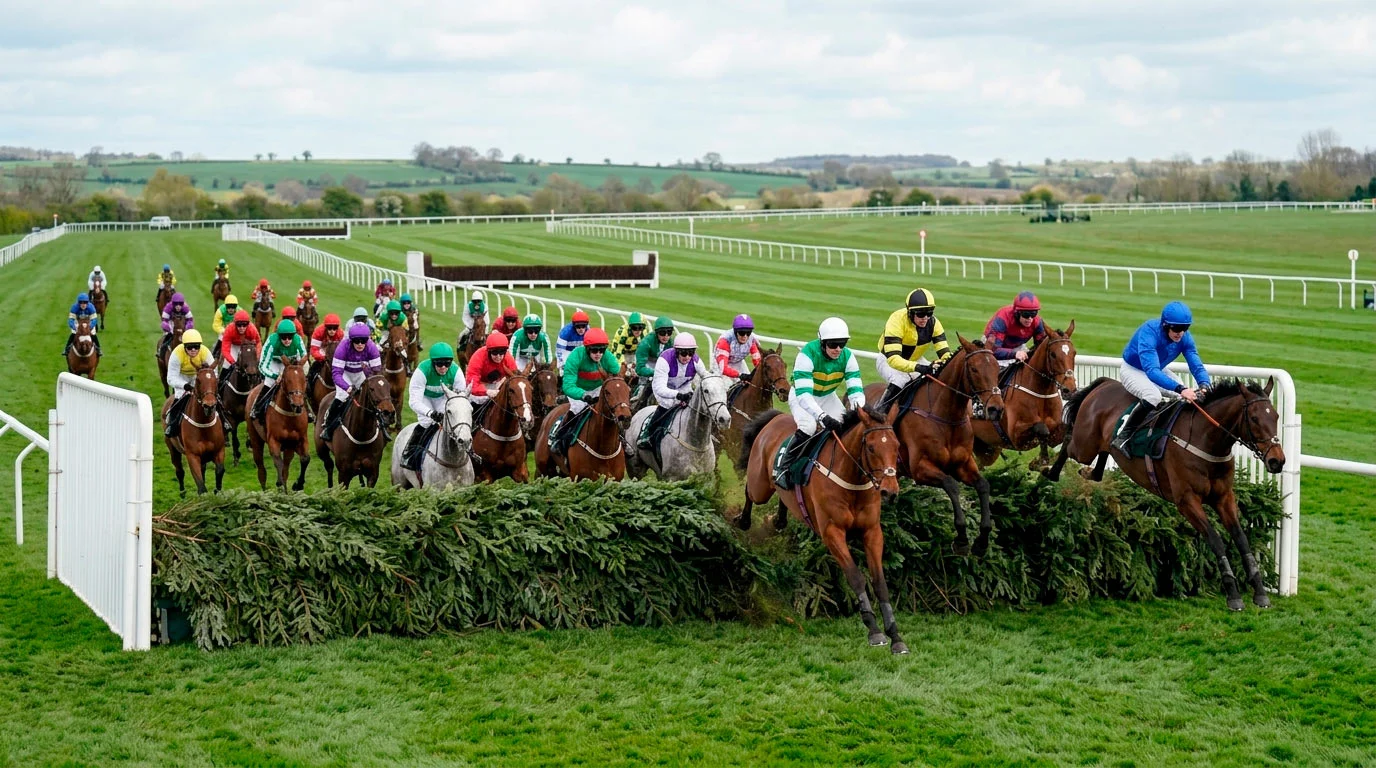
The reason extra places can be +EV — positive expected value — is straightforward maths. Adding a fifth paid place to a 20-runner each-way race expands the "net" by approximately 25%, without the bookmaker re-pricing the win odds to compensate. On a genuine 16/1+ shot in a competitive handicap, that 25% expansion can flip the place leg from a small loss against the book into a small win. Industry analysis pegs the effective edge at around 4 to 8 percentage points on suitable bets — meaningfully better than the standard each-way book.
Extra places are the only consistent positive-EV mechanism baked into the public UK each-way market. They exist for promotional reasons and live inside a specific window of races. If you bet each-way and ignore them, you are leaving your largest structural edge on the table.
Not every offer is the same — runner count, race shape, whether the price is early or SP, and whether BOG applies to the place leg all change the picture. The cluster article on extra-places promotions and the +EV maths behind them works through the 20-runner example end-to-end. Three pillar-level rules of thumb. First, the extra place has to apply to a race where the field is genuinely large enough to need it. Second, extra places on the favourite half of the market are mostly cosmetic; on the 16/1+ shots they are where the real edge lives. Third, the promotion has to be on a race you would have bet anyway — if extra places are pulling you into races you wouldn't otherwise touch, the value is being earned by the bookmaker, not you.
Three places, three markets: fixed-odds, Tote, exchange
Ask a hundred British punters where you can bet a horse to place and ninety-five will name the fixed-odds book. Of the remaining five, four will mention the Tote and one will mention Betfair. That distribution roughly matches the order the three markets operate by volume, and it understates how different the products are. They are three structurally distinct markets that happen to settle on the same finishing positions.
Fixed-odds place
Price agreed at the moment of bet. Place leg is half of an each-way bet, settled at 1/5 or 1/4 the win odds. Bookmaker's overround typically sits in the 110% to 115% band on the place market. BOG and extra-places promotions stack on top.
Tote pool place
No fixed price. Stakes go into a single pool, the operator takes a commission off the top (27% on Placepot, 16% to 26% on standard pools), and the remainder is split among winning tickets. The price is whatever the pool maths produces at the off.
Exchange place
Person-to-person market on Betfair. Place odds quoted in decimal, backed and laid like the win market, with commission on net winnings. Liquidity concentrates on big-field handicaps and festival meetings. Thin to non-existent on small fields.
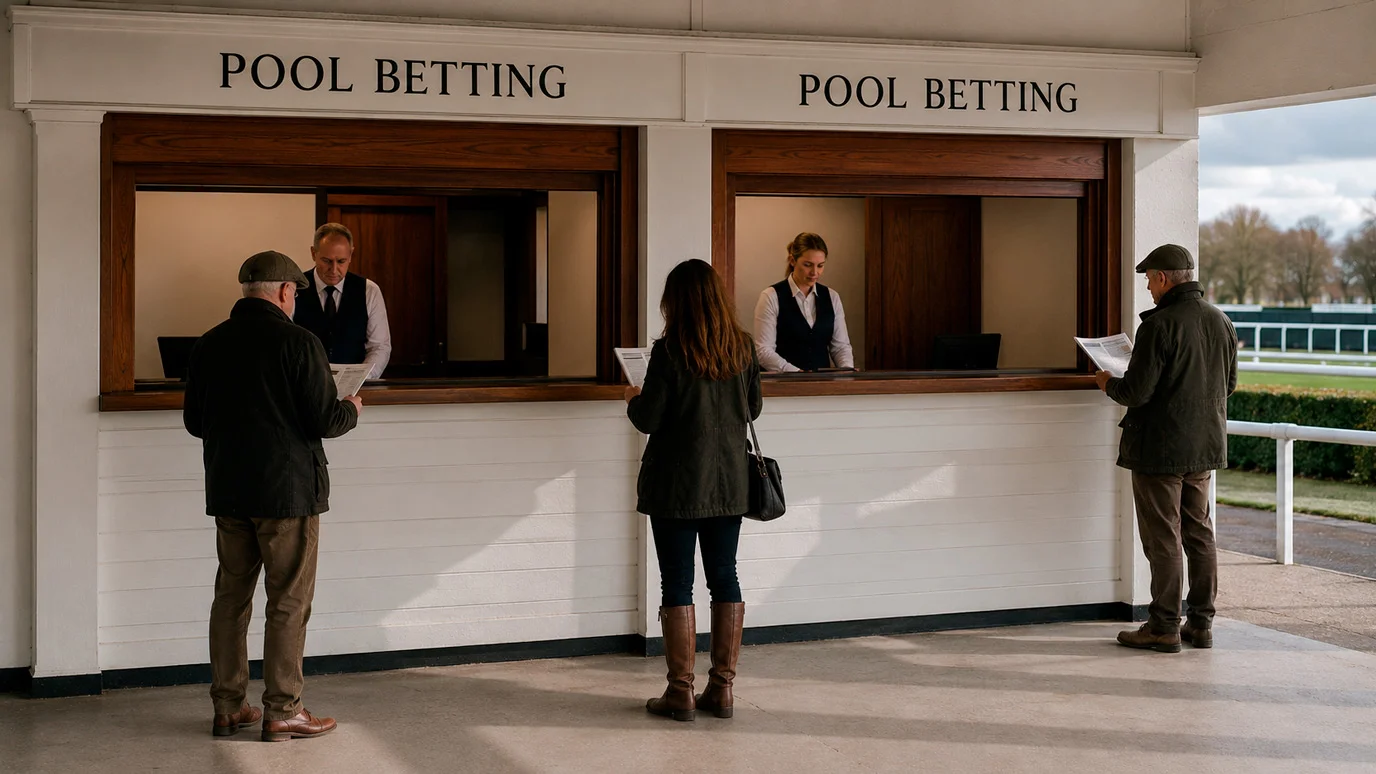
The fixed-odds book is the default for almost every British each-way punter. The price is known, the rulebook is universal, promotions stack on top. The trade-off is the overround — a typical UK place market on a competitive handicap runs at 110% to 115%, meaning the book takes roughly 10 to 15 pence of every pound staked across the field.
The Tote is a different animal. Pool betting here dates to 1929 and runs on "takeout" rather than overround — the percentage of the pool removed before paying winners. The standard Win pool takeout sits at 16% to 26%. The Placepot takes 27% off the pool before dividends. That sounds steep next to a 110% to 115% overround, but the two are not directly comparable: the overround scales with field size, so on big fields the bookmaker takes more in absolute terms than the Tote. On small fields the Tote takeout is brutal.
Britbet on-course pool betting turnover reached over £73.6 million in 2024, a 26% increase on 2018. On 1 November 2025, Britbet began operating its own branded pool betting at 19 partner racecourses — all 16 ARC tracks plus Hexham, Newton Abbot and Ripon — while 37 other partner courses continue with Tote-branded pools. The UK now has two parallel pool networks. The cluster article on Tote, Britbet and pool place betting in UK racing walks through how those pools fill and how the November 2025 reset reshaped the on-course flow.
The exchange — Betfair, effectively only Betfair at any serious scale — is the third option. It does not "set" a place market; it hosts a person-to-person market built off the rulebook's paid places, with commission (typically 2% to 5% on net winnings) replacing overround. On the right race — big field, big handicap, festival weekend — the exchange place market can be sharper than the fixed-odds book by several points. On the wrong race it has no liquidity. The cluster on Betfair exchange place markets covers that territory.
BOG, NRNB and Rule 4: settlement that quietly shapes returns
Three acronyms decide whether your each-way bet actually pays what the slip says. Most punters know them by name and not many know them by mechanics. Get them clear and you stop having the arguments at the settlement window I have watched for seven years.
Best Odds Guaranteed (BOG) — a promotional rule under which a fixed-odds bookmaker pays the bigger of the price you took and the SP. If you took 10/1 in the morning and the horse went off at 12/1, BOG pays you at 12/1. If you took 10/1 and the horse went off at 7/1, you keep the 10/1.
BOG is the most quietly important rule in UK each-way betting — it stops the market punishing you for taking an early price. The catch is that most UK firms apply BOG to the win part only, not the place part. If your horse drifts from 10/1 to 16/1 between bet and off, the win leg pays at 16/1 but the place leg settles at one-fifth of 10/1, not 16/1. The asymmetry means the BOG-versus-no-BOG decision is a subtly different problem on an each-way bet from a win-only bet.
NRNB and what it actually covers
Non-Runner No Bet (NRNB) is a rule, almost always offered as a free promotion on ante-post markets, under which your stake is refunded if your horse fails to start. NRNB applies equally to both halves of an each-way bet. For ante-post each-way punters backing outsiders weeks before the race, NRNB is the difference between a strategy that bleeds money on every non-starter and one that doesn't. The Cheltenham and Aintree ante-post markets are the most NRNB-active windows in the UK calendar.
The Rule 4 mechanism is the third piece. Tattersalls Rule 4 is a deduction applied to your winnings when a horse is withdrawn after the market has formed but before the off. The deduction is set on a scale based on the SP of the withdrawn horse — a 4/1 favourite withdrawing triggers a much bigger Rule 4 than a 50/1 outsider. On an each-way bet, Rule 4 applies to both the win and the place winnings, in pence per pound of net winnings, not stake.
Rule 4 worked through, in plain terms
A horse is backed at 4/1 in a 10-runner race. Before the off, the 9/4 second favourite is withdrawn. The Rule 4 scale for a withdrawn 9/4 shot is roughly 30p in the pound. The backed horse wins. Net winnings before deduction: £40. Rule 4: 30p × £40 = £12. Net winnings: £28. Total return: £38.
The cleanest mental model: each rule applies independently to each leg. Walk the settlement through in order — bet acceptance, market change, off, finish, BOG comparison, Rule 4 deduction, payout — and there are no surprises.
Big events that rewrite place terms
If you only looked at the rulebook, you would never guess that British each-way betting has a calendar. But it does, and it is dominated by three or four meetings a year that bend every standing rule. The Grand National in April. The Cheltenham Festival in March. Royal Ascot in June. The Derby Festival in May. These are place markets with their own physics.
Start with the volumes. Approximately £250 million was wagered on the 2025 Grand National weekend, with the single race generating 700% more betting activity than the Cheltenham Gold Cup. William Hill projected around £450 million in total bets across the four days of the 2026 Cheltenham Festival. Optimove Insights recorded 68.8 million individual bets across the four days of Cheltenham 2025, with daily active player counts running 178% to 189% above baseline. First-time deposits ran 310% to 417% above a neutral week. All 28 races of the 2025 Cheltenham Festival ranked in the top 31 most-bet-on horse races of the UK year.
"From Cheltenham to the Super Bowl, and from Champions League to the Libertadores Final, this list shows how our customers' interests span continents and sports. The Grand National and the Super Bowl are cultural phenomena that transcend sports and are annual traditions for recreational customers."
Greg Ferris, Managing Director Sports, Entain
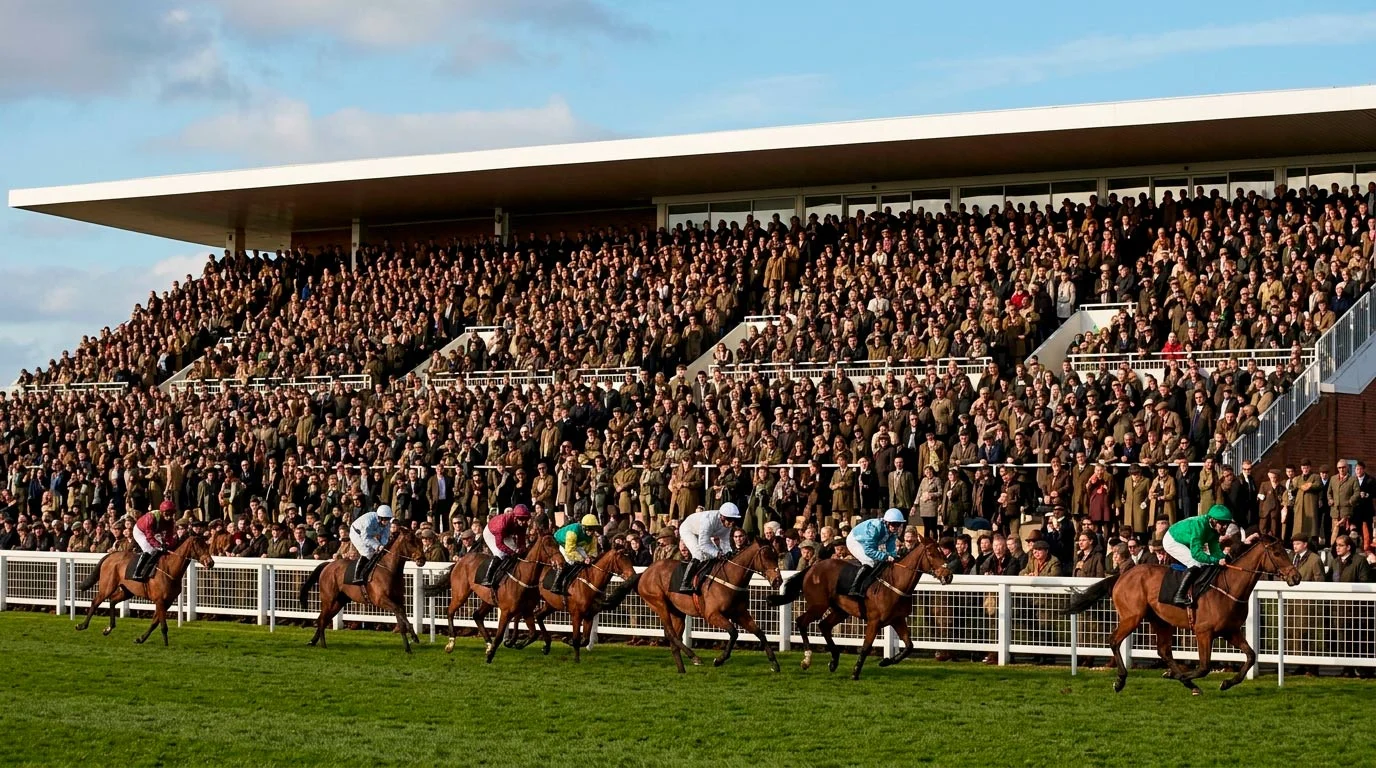
What those volumes do to the place market is everything. Operators respond to the deposit flood with the year's most aggressive extra-places promotions. The Grand National routinely pays 5, 6 or 7 places at 1/5, against the rulebook's 4 places at 1/4. Cheltenham handicaps with 23 to 28 runners attract 6+ paid positions across the major books. Royal Ascot produces wildly different terms race to race — a Group 1 sprint at 14 runners still pays only three places at 1/5, while the Hunt Cup or the Wokingham at 30 runners pays six or seven at 1/5.
Did you know. The historical extra-places promotion on the Grand National started at 4 paid places — the standard rulebook number. By 2025 the market norm had drifted to 6 places at 1/5. For the 2026 edition, the leading edge sat at 7 places at 1/5. The promotional rulebook on this single race has stretched almost a full place per decade.
The other event-driven effect is the on-course pool spike. During the 2024 Cheltenham Festival, Britbet sold over 570,000 bets across the week; one Placepot bet returned £55,000 from a £5 stake. The Tote and Britbet pools at festival meetings are several orders of magnitude deeper than at a quiet Wednesday at Wolverhampton, which means dividend variance compresses and takeout percentage becomes the dominant factor in expected return.
The trap at the big meetings is the volume. The temptation is to bet more, in more races, because more is going on. The discipline is to remember that place terms have only widened on the races where field, price band and shape genuinely create value. A 4/1 favourite at Royal Ascot, paid 4 places instead of 3, is not a value play just because the place column got an extra row. It is the same bad bet, prettier on the slip.
The regulatory weather: how 2024 to 2026 changed each-way behaviour
You can write a complete account of UK each-way betting without mentioning the Gambling Commission and you would be writing about a sport that no longer exists. The regulatory weather of the last two years has changed how the place market behaves: the licensed market is contracting at the top, the black market is growing fast, and the bet types most exposed are the ones favoured by higher-staking each-way bettors.
The mechanism is the financial vulnerability check. From 2024 the UK Gambling Commission has run a phased rollout of "light-touch" affordability checks, triggered when customer losses or deposits cross specified thresholds. In the pilot phase, approximately 95% of the 530,000 financial vulnerability checks conducted were frictionless, completed in the background through credit reference agencies. The remaining 5% required customer-facing intervention — and that 5% sits at the end of the staking distribution, where the each-way punter taking £100-plus bets on competitive handicaps lives.
"This preference for our highest profile fixtures is undoubtedly linked to the impact of affordability checks with there being fewer larger staking customers, who have either stopped betting or are placing their bets elsewhere, and have been only partially replaced by more recreational punters betting in smaller stakes, primarily at the bigger meetings."
British Horseracing Authority, Racing Report Q3 2025

"Placing their bets elsewhere" is the unspoken half of the sentence. Traffic to UK black-market betting sites reportedly increased by approximately 500% over a three-year period leading up to 2025. An estimated 5% of money wagered on the 2025 Grand National — around £10 million — flowed through unlicensed operators. The Betting and Gaming Council has estimated that thresholds at £1,000 in 24 hours or £2,000 over 90 days would subject roughly 120,000 bettors to checks, with around 45,000 potentially turning to unlicensed markets. The UK Government's online financial risk protections were estimated to reduce online horse racing betting GGY by 6% to 11%, equating to a £5 million to £8 million Levy reduction.
What does this mean at the rails? Three things. First, the bookmakers' appetite for larger each-way stakes is more cautious than three years ago. Second, the extra-places promotional escalator at big meetings has become more aggressive — a structural windfall for the disciplined punter. Third, the licensed market's contraction has not killed each-way. The £108.9 million levy and £766.7 million online GGY confirm the underlying market is still huge. But the texture of operating inside it has changed.
Responsible each-way betting
I've watched plenty of friends drift into difficulty with horse racing over the years, and almost none got there through cool-headed each-way decisions on big-field handicaps. They got there through chasing, through small stakes scaling up at the wrong moments, through betting races they had no opinion on because the cards happened to be in front of them. Health Surveys for England recorded a problem-gambling rate of 2.8% among horse-race bettors in 2018 — lower than several other gambling types — but the population number does nothing to soften an individual case. Each-way deserves serious self-management.
Do
- Set a weekly or monthly betting budget you can comfortably lose without affecting anything else, and stop when it is gone
- Track every each-way bet — date, race, stake, price, place terms, result — so you can see whether the strategy is actually working over a sample
- Use deposit limits, time-out tools and self-exclusion options offered by every UKGC-licensed operator if your behaviour starts to slip
- Treat extra-places promotions as value tools, not as reasons to bet more often
- Talk to GamCare or the National Gambling Helpline if you recognise warning signs in yourself or someone close
Don't
- Chase a losing day with bigger each-way stakes — the maths of each-way doesn't reward emotional escalation
- Bet each-way on races you would not have bet on without the promotion attached
- Treat the place leg as "insurance" against a bad win bet; it has its own price and its own value calculation
- Bet with money you need for essentials, rent, food or family — the BGC's own messaging on this is unambiguous
- Open new accounts with unlicensed operators because a check on your usual book felt invasive — the consumer protections you lose are exactly the ones designed to help you
One pragmatic note. The YouGov survey commissioned by the Betting and Gaming Council in 2024 found 65% to 66% of UK bettors were unwilling to share personal financial documents like bank statements or payslips with operators. If you find yourself facing a check that asks for that level of disclosure, the licensed industry is still the right place to be — the consumer protections that exist because the licence requires them are exactly the ones designed to help you. The check is an inconvenience. The protection it sits inside is what keeps the rest of your betting life intact.
Frequently asked questions
What is an each-way / place bet in UK horse racing?
An each-way bet is a two-part wager on a single horse: a "win" half and a "place" half, with the stake doubled to cover both. The win half pays only if the horse wins. The place half pays if the horse finishes within the paid places set by the race's place terms — typically the first two, three or four positions, depending on field size and whether the race is a handicap. The place leg settles at a fraction of the win odds, usually one-quarter or one-fifth. A standalone "place bet" exists on exchanges and some fixed-odds books, but the more common British structure is the two-part each-way bet on one slip.
How are place terms decided (places paid and fraction)?
Two facts decide place terms: whether the race is a handicap, and how many runners come under starters orders. Fewer than five pay win only. Five to seven pay two places at one-quarter. Non-handicaps of eight or more, and handicaps of eight to eleven, pay three at one-fifth. Handicaps of twelve to fifteen pay three at one-quarter. Handicaps of sixteen or more pay four at one-quarter. These terms are the universal UK industry standard and apply at the moment the race starts, not when the bet was placed — late non-runners can shift the terms before the off.
When is each-way better value than win-only?
Each-way is better value than win-only when the place leg, treated as a standalone bet, prices above the horse's actual chance of placing. That is almost never the case on short-priced favourites — backing a two-to-one favourite each-way is almost always worse than backing it to win. It is far more often the case on bigger prices in competitive handicaps, particularly in fields of twelve-plus runners or where extra-places promotions widen the paid frame. The British rule of thumb — each-way tends to make sense at sixteen-to-one and bigger in a competitive handicap — still holds well in 2026.
What are extra places and when do bookmakers offer them?
Extra places are a temporary widening of the paid place column for a single named race, paying more positions than the standard rulebook requires. The fraction usually stays at one-fifth the odds. UK operators run extra-places promotions most aggressively on marquee meetings — the Grand National, the Cheltenham Festival, Royal Ascot, the Derby Festival — and in lighter form on selected Saturday handicaps. The 2026 Grand National attracted promotions paying as many as seven places at one-fifth, against the standard four. Extra places are the only consistent structural value mechanism baked into the public UK each-way market.
How are each-way returns calculated?
Treat the bet as two independent halves. The win half settles at the full win odds and pays only on a winner. The place half settles at the place fraction — one-quarter or one-fifth — of the win odds, and pays on any finishing position inside the paid places. So a £10 each-way at twenty-to-one in a fourteen-runner handicap returns £210 from the win half on a winner plus £60 from the place half on a place: £270 if the horse wins, £60 alone if it finishes second or third. Total stake on a £10 each-way bet is always twenty pounds.
Are place bets and each-way bets the same thing?
No, although they are often confused. An each-way bet has two halves and doubles the stake. A pure place bet is a single-leg bet on a horse to finish in the paid places, with no win component, priced separately from the place half of an each-way bet. Pure place bets exist on the Betfair Exchange, in the Tote pool place market, and on a smaller number of fixed-odds books. The pricing differs because the each-way place leg is yoked to the win odds via a fraction, while the standalone place is priced directly off the horse's chance of finishing in the frame.
Standing on the right side of the place line
From the rulebook back to the rails — a closing thought on how the work in this guide is meant to live in your week.
I'll leave you with the thing I tell every new each-way punter I meet. The place market is not a separate sport from the win market. It is the same race, with a different price column and a different paid frame, and the people who do best in it are the ones who treat the place leg as its own bet with its own value question rather than as a consolation prize stapled to a win bet. The maths in this guide is universally available — the rulebook is in every bookmaker's T&Cs, the field-size data is in the BHA's quarterly reports, the takeout percentages are in the Tote's published rules — but the discipline of actually using it is rare. That gap is the punter's edge.
Use the cluster pages on this site for the depth. And keep one eye on the regulatory weather, because it is not stopping. The mechanics of the each-way bet itself are remarkably stable — a two-part wager, a paid frame, a fractional payout, all on a rulebook recognisably the same since the 1970s. The mechanics around it are not. Stay current with the second half and the first will keep paying you back.
Articles
Prepared by the Racing Place Betting editorial staff.
